

Pneumatic conveying solution for emulsifier powder
During the production and processing of emulsifier powders, enterprises often face pain points such as dust pollution, material waste, low conveying efficiency, and high equipment maintenance costs. Traditional manual feeding or mechanical conveying methods not only fail to ensure sealing but also easily cause moisture and caking of materials, affecting subsequent process stability and product quality. To address these practical challenges, Head Powder offers professional pneumatic conveying solutions for emulsifier powders, helping enterprises achieve clean, efficient, and controllable powder circulation.
Material Characteristic Analysis
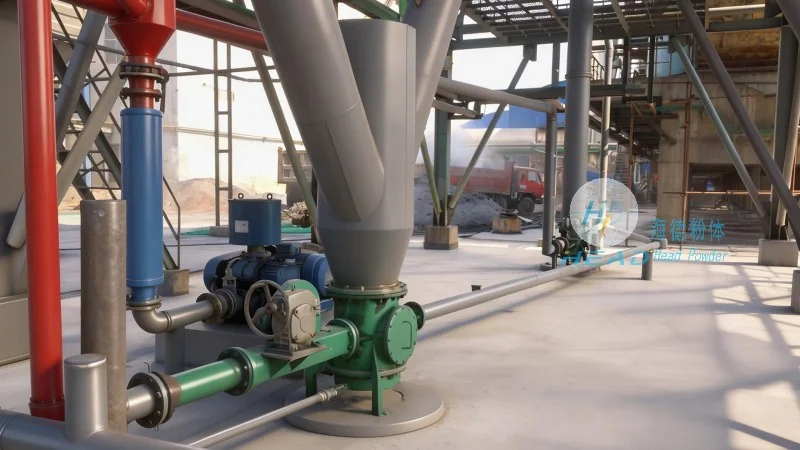
Emulsifier powders typically have low density, tiny particle size, easy lifting, and strong hygroscopicity. Some emulsifiers also have typical adhesive properties, which can easily accumulate or bridge the inner walls of pipelines during transportation. Therefore, it is recommended to fully consider the gas-solid two-phase flow characteristics of the material in the conveying system, reasonably design airflow velocity, material-gas ratio, and pipeline layout to facilitate smooth conveying, no clogging, and minimal damage.
Product Introduction

Head Powder's emulsifier powder pneumatic conveying system employs superior positive or negative pressure sealed pipeline conveying technology, transporting emulsifier powder from the storage silo to the target workstation via pneumatic force. The system covers feeding devices, sending tanks, pipeline assemblies, air source handling equipment, dust separation and removal devices, and automation control systems. Conveying paths, distances, and capacity can be flexibly customized according to customers' site layout and process requirements, supporting multi-point feeding and relatively accurate measurement.
Product advantages
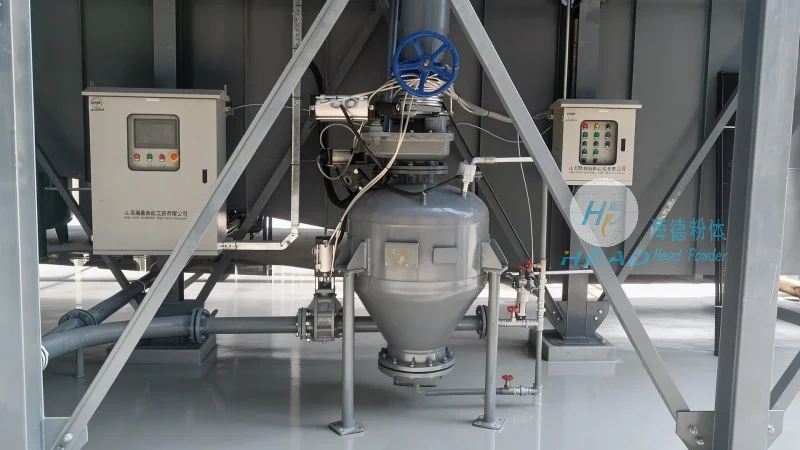
To address customers' pain points in dust control, material loss, conveying stability, and ease of maintenance, Head Powder offers the following solutions:
- Fully enclosed conveying effectively suppresses dust leakage, improves the working environment, and reduces material waste.
- The conveying process is smooth, preventing material damage or caking due to mechanical external forces, ensuring consistent quality.
- The system is highly automated and can be integrated into existing DCS or PLC control networks to enable remote monitoring and intelligent scheduling.
- Pipeline elbows are made of wear-resistant materials, with key components designed for quick release to reduce the frequency of cleaning and maintenance.
- Measurement is relatively accurate and can be equipped with weighing modules or flow sensors to meet batch mixing requirements.