

Qinghai Haidong Ceramic Powder Low Air Velocity Anti-Crushing Conveying Project
In the Haidong region of Qinghai, a ceramic powder manufacturer faced crushing difficulties during powder conveying. Traditional pneumatic conveying systems suffered severe damage to ceramic powder particles due to excessively high wind speeds, affecting product quality and production efficiency. To address this, Head Powder has tailored a low-speed anti-shatter pneumatic conveying system for them, successfully achieving gentle and efficient ceramic powder conveying, becoming a typical application case for pneumatic ceramic powder conveying in the region.
Case Summary
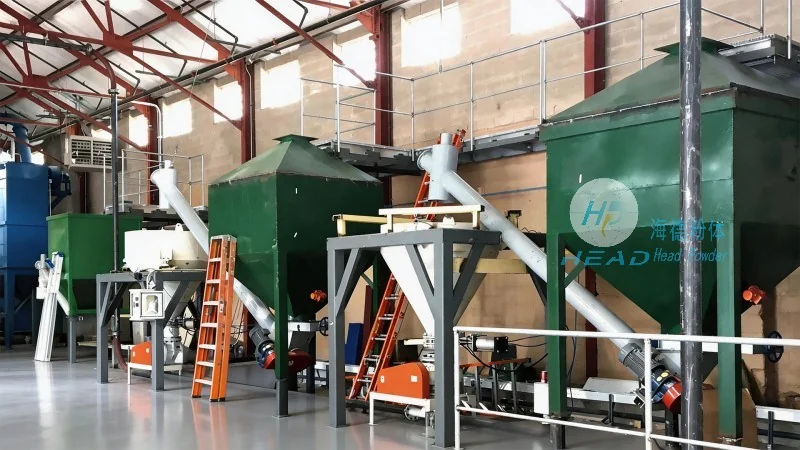
A ceramic powder company is located in Haidong, Qinghai, mainly engaged in the processing and production of high-performance ceramic raw materials. During the powder conveying stage of the production line, enterprises need to transport finely made ceramic powders from the grinding workshop to the batching workshop, about 80 meters away, and the powder has high requirements for particle integrity. The company had tried conventional pneumatic conveying equipment, but the results were unsatisfactory, so they sought a better solution. After Head Powder took over the project, it designed a low-speed anti-crushing pneumatic conveying system based on on-site conditions, which was successfully put into operation.
Customer pain points

In actual production, the company faces the following main pain points:
1.Severe powder breakage: Ceramic powder itself is highly brittle. Traditional pneumatic conveying wind speeds usually exceed 20 m/s. The high-speed airflow collides with the pipe wall, causing a large number of particles to break apart, reducing the finished product pass rate by about 15%.
2.High energy consumption and maintenance costs: In traditional systems, after reducing wind speed to reduce breakage, pipe blockages arise, forcing increased fan power and rising power consumption, accelerated pipeline wear, and increased replacement frequency.
3.Conveying efficiency is unstable: Due to changes in particle size distribution after powder crushing, large fluctuations in conveyed concentration mean the production line often needs to be stopped to adjust parameters, affecting overall capacity.
Product advantages
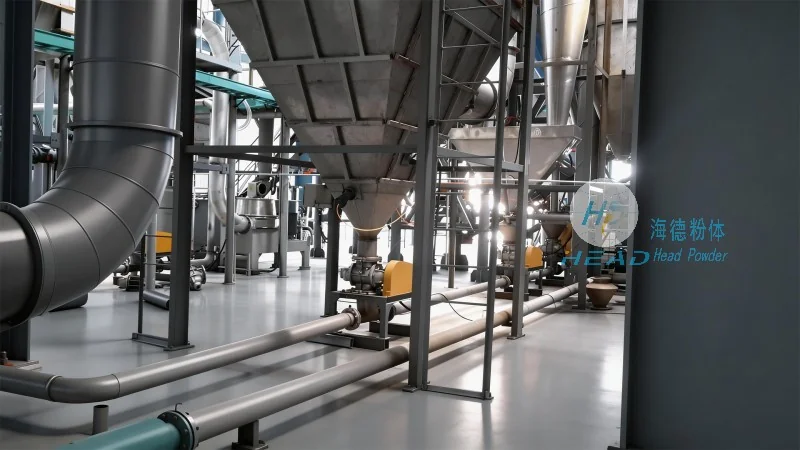
To address these pain points, Head Powder offers a low-velocity anti-crush pneumatic conveying system solution, with specific advantages including:
1.Relatively accurate wind speed control: By optimizing airflow distribution and pipeline diameter, the conveying air velocity is stably controlled at 10-12 m/s, helping materials move in a suspended state within the pipeline and avoiding breakage caused by high-speed collisions.
2.Anti-breakage structure design: Uses a bent pipe buffer section, wear-resistant ceramic lining, and progressive acceleration section to reduce the point of contact between material and pipe wall, with a measured crushing rate controlled within 1%.
3.Energy-saving operation: Low wind speed combined with variable frequency fans reduces overall energy consumption by about 30% compared to traditional systems, and due to reduced wear, equipment lifespan is extended, with maintenance intervals extended from 3 months to 12 months.
4.Stable output: The system is equipped with an automatic adjustment feedback mechanism that can adjust airflow and material-air ratio in real time according to material characteristics, helping to ensure uniform concentration delivery and uninterrupted operation of the production line.
Currently, this low-velocity anti-crushing pneumatic conveying system has been operating normally at the Qinghai Haidong project site for over a year, helping the company achieve efficient, low-loss, and low-energy ceramic powder conveying, earning high recognition from customers.