

Pneumatic conveying solution for limestone powder
In the process of industrial powder processing, the conveying stage of limestone powder often faces numerous challenges: dust dispersion leads to environmental pollution, accelerated equipment wear, low conveying efficiency, frequent pipeline blockages, and other issues that directly affect production stability and operating costs. To address these practical pain points, Head Powder deeply analyzes the characteristics of limestone powder materials and provides customized pneumatic conveying system solutions to help enterprises achieve efficient, environmentally friendly, and low-consumption material transfer.
Material Characteristic Analysis

Typical physical properties of limestone powder include: a wide particle size distribution (usually 200 to 800 mesh), bulk density of about 0.8-1.2 g/cm³, moisture content generally below 1%, easy moisture absorption and agglomeration, and typical abrasiveness. These characteristics determine that the conveying system must have a structural design with anti-clogging, wear resistance, and good sealing. At the same time, gas source equipment must match appropriate pressure and flow rates to prevent material accumulation inside the pipeline.
Product Introduction
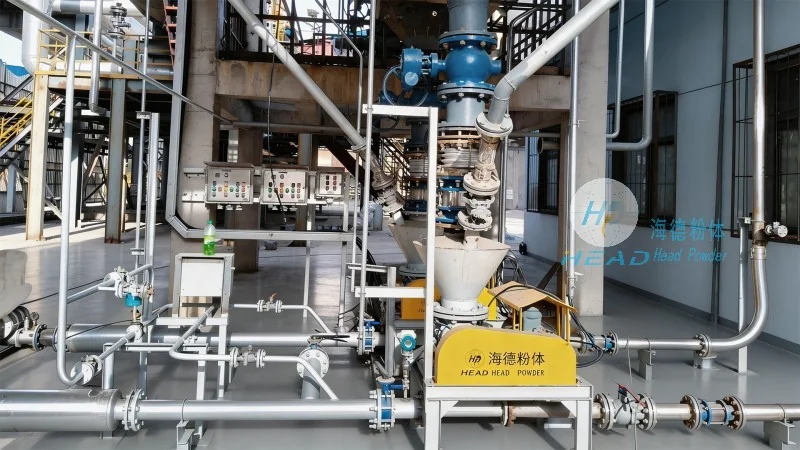
The Head powder limestone powder pneumatic conveying system adopts mature positive or negative pressure dense phase conveying technology, and can be customized according to customers' actual working conditions (conveying distance, output, site space). The core components of the system include: rotary feeder, silo pump, Roots blower (or air compressor), pneumatic conveying pipeline, dust collector, and intelligent control system. The overall equipment material is made of wear-resistant alloy steel or ceramic lining, effectively extending service life. The control system supports PLC automatic adjustment, enabling real-time monitoring and fault alarms.
Product advantages

To address customer pain points, Head Powder offers optimized solutions from the following aspects:
1. Sealing design: Fully sealed pipelines and unloading devices suppress dust leakage from the source, meeting environmental emission standards.
2. Wear-resistant structure: Key components use relatively high strength wear-resistant materials, significantly extending service life and reducing downtime and maintenance frequency.
3. Anti-blockage airflow adjustment: Precise control and fluidization assistance through gas-solid comparison to prevent material deposition during curved or long-distance conveying.
4. Energy Consumption Optimization: Uses energy-saving air supply equipment and intelligent variable frequency control to reduce unit energy consumption per transmission.
5. Customized layout: Flexible design of pipeline routing according to factory space shortens construction cycles and reduces renovation difficulty.