

Pneumatic conveying solution for dry sludge powder
During sludge treatment, the conveying stage of dry sludge powder often faces issues such as blockages, dust generation, high energy consumption, and frequent maintenance. Traditional mechanical conveying methods have poor adaptability to dry sludge sensitive to moisture content fluctuations, easily causing pipeline blockages and equipment wear. Additionally, open conveying leads to dust pollution, affecting the working environment and employee health. Additionally, insufficient conveyor system stability leads to capacity bottlenecks, restricting the continuous operation of subsequent disposal processes.
Material characteristics
Dry sludge powder is usually fine in texture, has low moisture content (generally below 10%), a wide particle size distribution, and typically contains fibrous and organic matter. It has poor flowability, easily absorbs moisture and clumps, and is prone to static electricity and agglomeration during transportation. These characteristics place high demands on the conveying system's sealing, anti-clogging capability, wear resistance, and explosion-proof performance.
Product Introduction

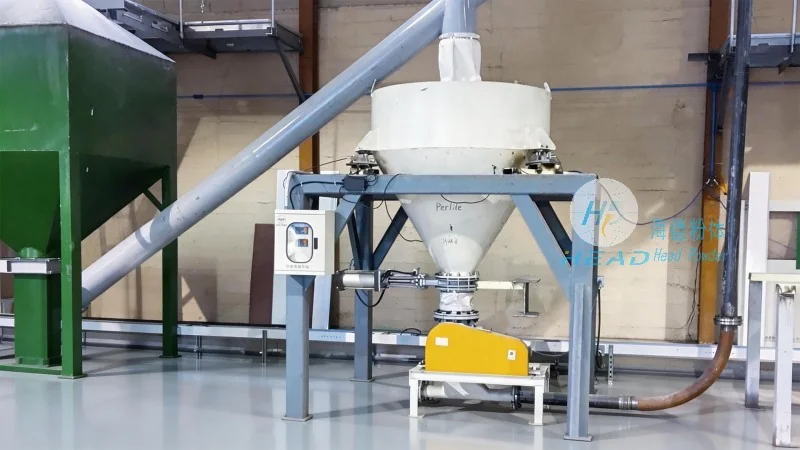
Head Powder's pneumatic dry sludge powder conveying system uses low-pressure dilute or dense phase conveying technology, efficiently transporting dry sludge powder within sealed pipelines through compressed air. The system consists of a feeding device, conveying pipelines, gas source equipment, dust separation and removal device, and intelligent control system. Customized solutions can be tailored to the customer's on-site conditions, suitable for sludge incineration, drying, and resource utilization scenarios.
Product advantages

To address the pain points of dry sludge powder clogs and high dust emissions, Head Powder has introduced fluidized anti-blocking technology into its system design, helping materials flow smoothly within the pipeline; Fully enclosed pipeline structure prevents dust leakage and improves the working environment; Modular components facilitate installation and maintenance, reducing downtime for maintenance; The intelligent control system monitors parameters such as pressure and flow in real time, automatically adjusts operating status, and reduces manual intervention and energy consumption. At the same time, for abrasive materials, wear-resistant elbows and pipeline linings are used to extend equipment lifespan.