

Pneumatic conveying solution for flame retardant powder
In the production and use of flame retardant powders, enterprises often face environmental pressure caused by dust emissions, high material loss, low manual handling efficiency, and poor safety in the working environment. Traditional conveying methods not only easily cause occupational health risks but also cause equipment failures and downtime losses due to material clumping and adhesion. Therefore, an efficient, sealed, and automated conveying system has become a pressing demand in the industry.
Material characteristics

Flame retardant powders (such as aluminum hydroxide, magnesium hydroxide, antimony trioxide, etc.) typically have fine particle size, light density, easy moisture absorption, large differences in flowability, and are generally corrosive or irritating. These characteristics place strict requirements on the sealing, wear resistance, anti-adhesion capability, and pressure control of the conveying system, making it difficult for ordinary conveying equipment to apply directly.
Product Introduction

The flame retardant powder pneumatic conveying system launched by Head Powder uses a sealed pipeline conveying method, based on the principle of dense phase transport under positive or negative pressure, achieving smooth material transfer from storage points to usage points. The system consists of a feeding device, conveying pipelines, air supply equipment, dust separation and removal mechanism, and an intelligent control system. It can be flexibly configured modularly according to material characteristics and production processes to meet customized needs of different scales and working conditions.
Product advantages
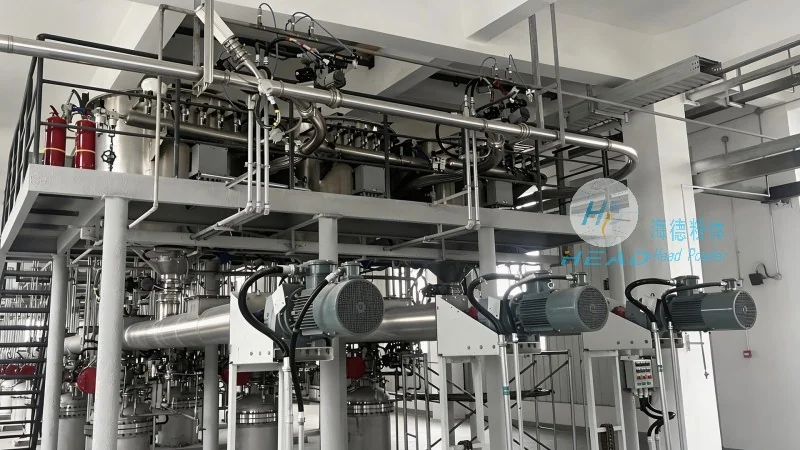
To address customer pain points, we offer the following complete solutions:
- Sealed and dust-free transportation: Fully enclosed pipelines effectively prevent dust leakage, improve workshop environments, and help enterprises meet environmental emission standards.
- Automated operation: Through centralized control by PLC and host computer, automatic feeding, conveying, dust removal, and shutdown are realized, reducing manual intervention and improving operational efficiency.
- Anti-caking design: Optimize airflow parameters and delivery paths, paired with arch-breaking devices to prevent material retention or caking inside the pipeline, helping the system maintain long-term smooth flow.
- Low wear and low energy consumption: Uses wear-resistant pipelines, reasonably matches air source and flow rate, reduces equipment wear and lowers energy consumption per unit of conveying.
- Flexible customization: Differentiated piping materials and sealing solutions are provided for different flame retardant powder particle sizes, humidity, and corrosiveness, helping to ensure system stability and reliability.