

PS Pneumatic Conveying Solution for Particles
In industries such as plastics, chemicals, and building materials, the transportation of PS pellets (polystyrene pellets) often faces issues such as dust pollution, pipeline blockages, material damage, and high equipment maintenance costs. Traditional mechanical conveying methods are not only inefficient but also prone to moisture or caking of materials, leading to production interruptions. Enterprises urgently need a stable, sealed, and energy-saving pneumatic conveying solution to address the pain points of dust leakage and poor conveyance.
Material characteristics: lightweight, fragile, with high conveying requirements
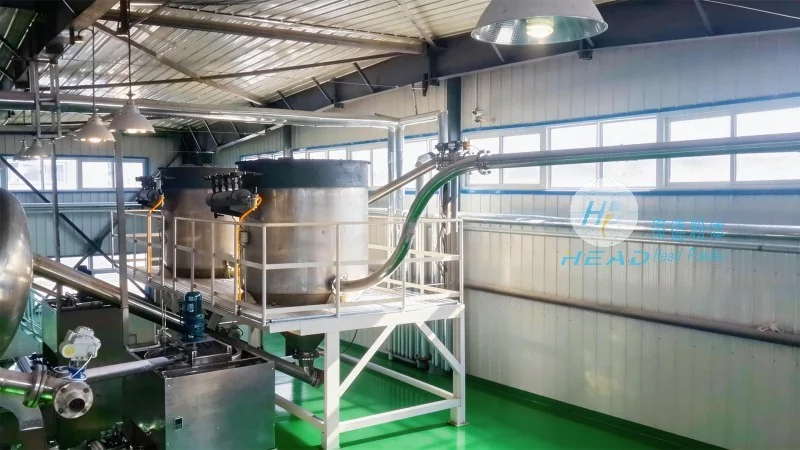
PS particles are lightweight, smooth-surfaced granular materials with a density of about 0.9-1.05 g/cm³, and particle sizes typically between 2-5 mm. Its characteristic is good flowability, but it is easily affected by static electricity causing adsorption, and during high-speed conveying, it is prone to damage or fine powder formation due to collisions. Therefore, conveying systems need to be low-speed, with relatively accurate pressure control, and equipped with anti-static and cushioning designs to support material integrity.
Product Introduction: Head Powder PS Particle Pneumatic Conveying System

Head Powder has developed a customized pneumatic conveying system tailored to the characteristics of PS particles. This system uses negative pressure or positive pressure dense phase conveying methods, efficiently transferring PS pellets from storage locations to processing equipment through pipelines. The equipment includes a rotary feeder, fan, separator, pipeline, and automatic control system. The entire line adopts a fully enclosed design to effectively prevent dust leakage and reduce material damage rates. Head Powder can provide one-stop services from solution design and equipment manufacturing to installation and commissioning, tailored to customers' site layouts, conveying distances, and production capacity requirements.
Product Advantages: Accurately addresses customer pain points
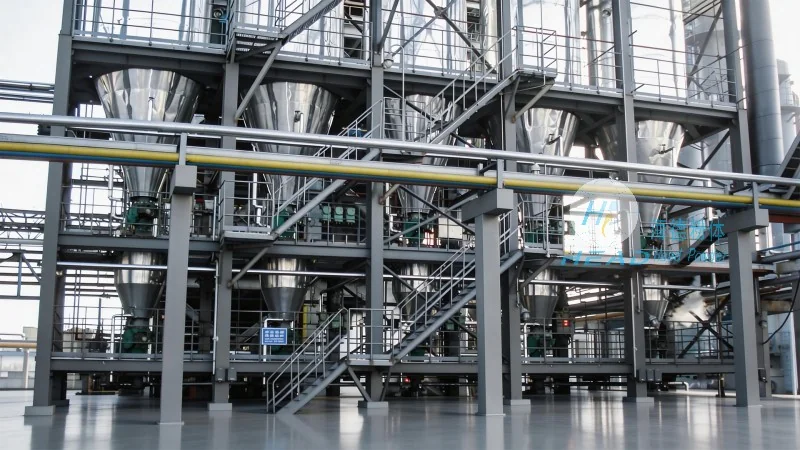
To address the dust issues that customers care about, the system uses sealed pipelines and efficient dust separation technology to achieve dust-free transportation; To address blockages and material damage, optimizing the bending radius, buffering device, and low-speed dense phase conveying reduces material collision and wear, keeping the breakage rate below 1%; To reduce maintenance costs, wear-resistant materials and modular structures are selected for quick and convenient inspection. Additionally, the intelligent control system can monitor pressure, flow, and material levels in real time, support remote control, improve production continuity, and help companies reduce costs and increase efficiency.