

Pneumatic conveying solution for graphite powder
Graphite powder has low density and fine particle size; traditional manual or mechanical transport easily generates dust, causing environmental pollution and raw material loss; At the same time, graphite powder is lubricating and tends to stick to the inner wall of the pipeline, causing blockages; Some graphite powders are sensitive to static electricity, posing safety risks during transportation. These pain points seriously affect production efficiency and operational safety.
Material characteristics
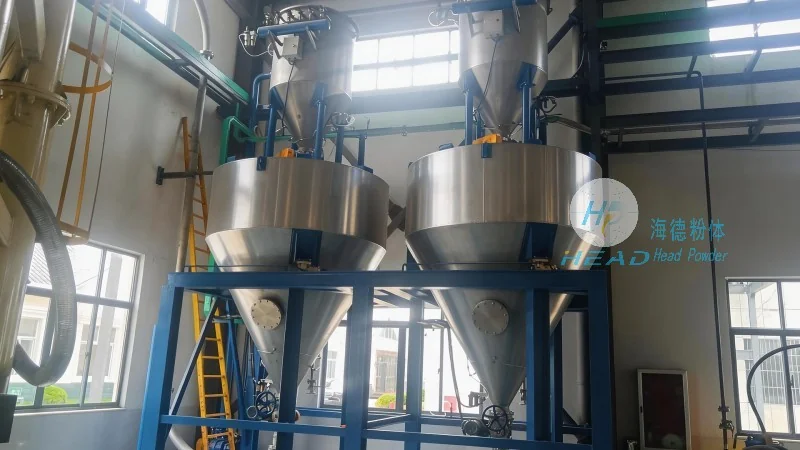
Graphite powder particle size is usually between 5~50μm, with a specific gravity of about 0.2~0.8g/cm³, characterized by low density, high flowability, strong lubricity, easy agglomeration, and easy static electricity generation. During conveying, key factors such as dust prevention, anti-blockage, and anti-static electricity must be fully considered.
Product Introduction

Head Powder provides customized pneumatic conveying system solutions tailored to the characteristics of graphite powder materials. The system uses either positive or negative pressure dense/dilute phase conveying methods, with core equipment including rotary feeders, venturi injectors, silo pumps, dust collectors, pipelines, and intelligent control units. Tailored to the user's on-site process conditions (conveying distance, capacity, installation space, etc.), it achieves fully sealed, automated conveying of graphite powder from storage to the point of use.
Product advantages
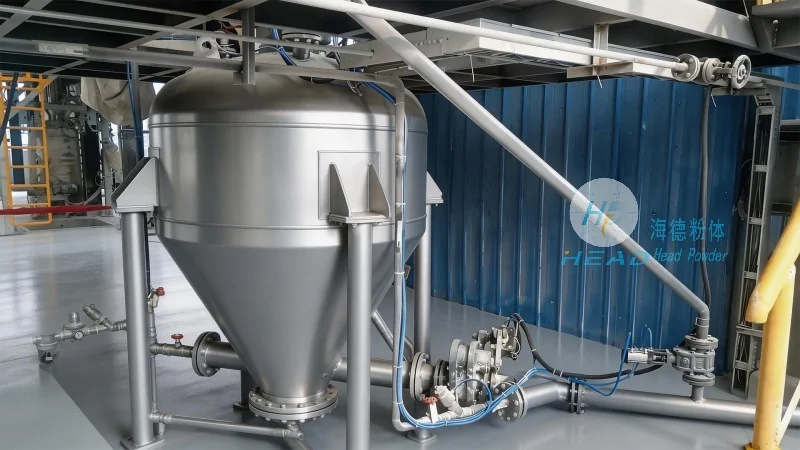
To address customer pain points, the Head Powder Graphite Pneumatic Conveying System offers the following advantages:
1.Fully sealed conveying: Eliminates dust leakage, improves the working environment, and reduces raw material waste.
2.Anti-clogging design: Special fluidization devices and pulse back-blowing technology are used to prevent graphite powder from adhering and caking inside the pipeline.
3.Anti-static treatment: All pipes and equipment are electrostatic grounded, equipped with anti-static filter bags and grounding systems to eliminate static hazards.
4.Intelligent control:P LC automatically adjusts conveying parameters, monitors pressure, flow, and material level in real time, enabling unattended operation.
5.Energy consumption optimization: Match air velocity according to material characteristics to reduce energy consumption of the air source, and ensure controllable overall operating costs.