

Pneumatic conveying solutions for various dye powders
During dye production and processing, the transportation of powdered materials often faces issues such as dust emissions, environmental pollution, material waste, and health risks to personnel. Traditional manual feeding or mechanical conveying methods are inefficient, easily causing moisture and caking of materials, and making it difficult to achieve accurate measurement and automated control. These pain points directly affect the stability of production lines and product quality, while also increasing operating costs and environmental pressures for companies.
Material characteristics: the physical and chemical characteristics of dye powders

Dye powders typically have small particle size, low density, are easily lifted, have strong hygroscopicity, and some varieties exhibit characteristics such as typical static electricity or slight adhesion. Different types of dyes have differences in flowability, moisture content, and temperature sensitivity, placing high demands on the sealing, explosion-proofing, and cleanliness of the conveying system. It is necessary to design reasonable conveying paths and pneumatic parameters based on the specific material characteristics to avoid blockages, delamination, or changes in physical properties.
Product Introduction: Head Pneumatic Powder Dye Powder Conveying System
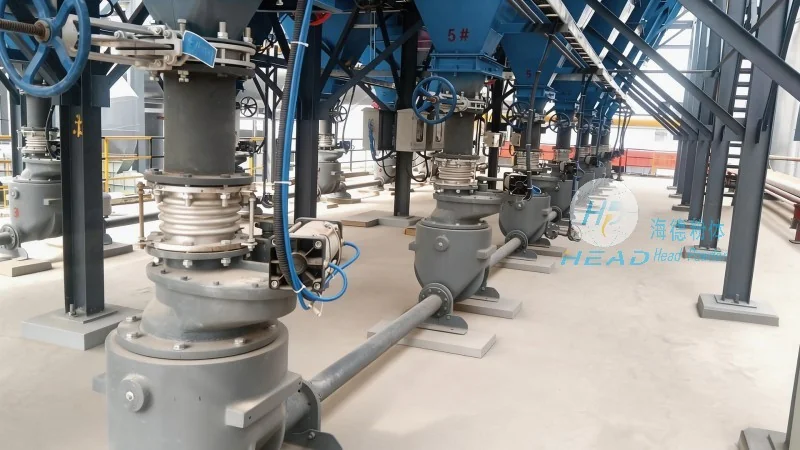
Head Powder provides customized pneumatic conveying solutions tailored to the conveying needs of various dye powders. The system uses sealed pipeline conveying methods of positive or negative pressure, equipped with dedicated air sources, feeding devices, dust separation and removal equipment, and automated control systems, enabling fully sealed, automated, and continuous material transfer from the raw material silo to the point of use. Equipment materials can be selected from stainless steel or special coatings based on material characteristics, meeting food-grade and chemical-grade hygiene and corrosion resistance requirements.
Product Advantages: Technical solutions that address customer pain points

- Closed spaces have lower pollution: The entire system operates under either negative pressure or positive pressure in a sealed environment, effectively suppressing dust leakage, improving the working environment, and reducing material loss.
- Automation provides relatively accurate control: Integrates weighing sensors, flow control valves, and PLC control to achieve more accurate feeding and automatic proportioning, reducing manual intervention and error.
- Flexible customization and adaptation: Design conveying speed, pipe diameter, elbow angle, and arch-breaking device based on the particle size, viscosity, humidity, and other characteristics of dye powder to prevent clogging and delamination.
- Energy-saving and low-consumption maintenance: Optimized air source power consumption, modular structure for easy disassembly and cleaning, reducing long-term operation and maintenance costs.