

Pneumatic conveying solution for iron oxide pigments
During the production, storage, and transportation of iron oxide pigments, they face issues such as dust flying, high material loss, severe environmental pollution, and low manual operation efficiency. Traditional manual or mechanical transport methods are difficult to meet environmental regulations and easily cause pigment cross-contamination, affecting product purity. Enterprises urgently need a sealed, efficient, and low-energy-consumption automated conveying solution to improve the production environment and overall benefits.
Material characteristics
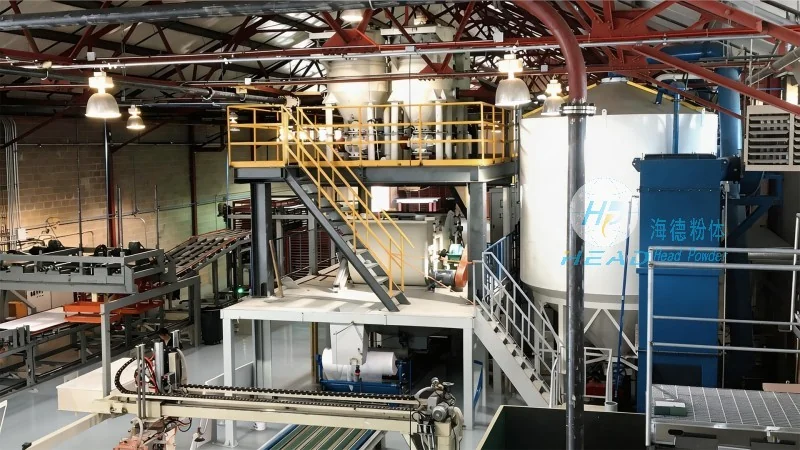
Iron oxide pigments are high-density, easily hygroscopic and strongly adherent powder materials, with particle fineness usually between 0.1~10μm and poor flowability. Its specific gravity is about 0.8~1.2 t/m³, with a large rest angle, which easily causes static electricity accumulation and blockage during transportation. In addition, iron oxide pigments are sensitive to moisture and require strict control of humidity in the transport air to prevent caking and affecting subsequent applications.
Product Introduction
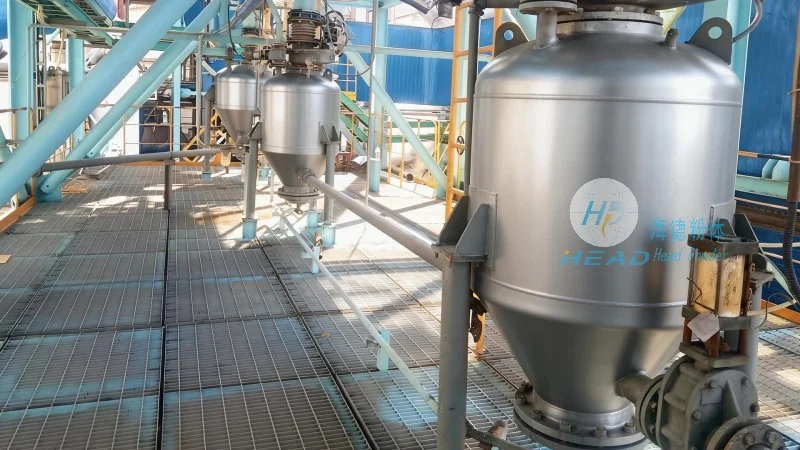
Head Powder's pneumatic conveying solution for iron oxide pigments uses positive pressure dense phase or dilute phase pneumatic conveying technology, combined with customized sending tanks, rotary valves, pipelines, and dust separation systems, achieving sealed and automated transfer from storage silos to production lines. The system can adapt to different production capacity requirements, with conveying distances reaching several hundred meters, and is equipped with an intelligent control module that monitors material-air ratio, pressure, and flow in real time, ensuring stable and reliable conveying processes.
Product advantages
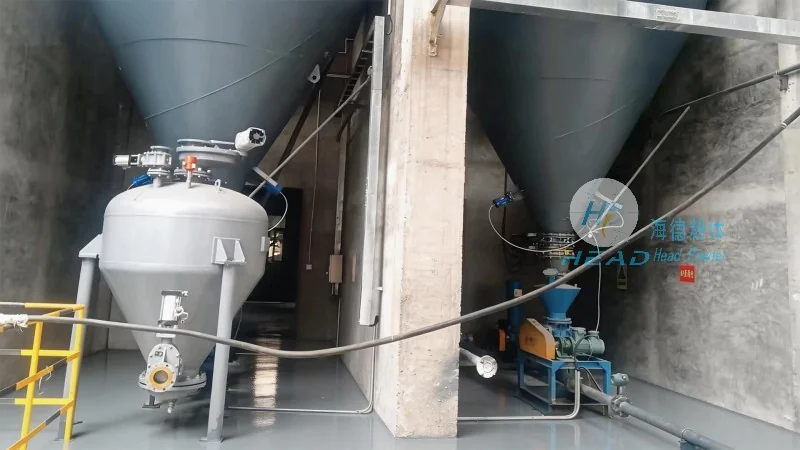
To address customer pain points, Head Powder Solutions offers the following advantages: fully sealed pipeline design effectively prevents dust leakage and improves the working environment; Reduce material damage rates and maintain particle integrity through airflow regulation and pipeline optimization; The intelligent control system reduces manual intervention, improves conveying efficiency, and lowers operation and maintenance costs; Elbows, pipeline linings, and feeding devices can be customized according to material characteristics, handling high wear and easily clogging conditions, thereby extending equipment lifespan.