

Microcrystalline cellulose MCC pneumatic conveying solution
During the processing and transportation of microcrystalline cellulose (MCC), achieving efficient, dust-free, and low-damage material transport is a common challenge faced by many manufacturing enterprises. Relying on years of pneumatic conveying experience, Head Powder provides customers with customized microcrystalline cellulose MCC pneumatic conveying solutions and complete system equipment to support the normal operation of production lines.
Customer pain points
Microcrystalline cellulose MCC features fine particle size, low density, and easy flight. Traditional mechanical conveying methods tend to generate large amounts of dust, which not only pollutes the workshop environment but may also pose occupational health risks. In addition, mechanical extrusion during conveying can easily cause material breakage, affecting the distribution of product particle size; Moreover, the material is highly hygroscopic and prone to static electricity, further increasing the difficulty of conveying. How to achieve sealed, stable, and low-loss conveying has become an urgent pain point for enterprises to solve.
Material characteristics
Microcrystalline cellulose (MCC) is a white powder or granule obtained by hydrolyzing, drying, and crushing natural cellulose. It has a low bulk density (about 0.2~0.5 g/cm³), a large angle of repose, and average flowability. Its particles have porous surfaces and strong adsorption, easily agglomerating during pneumatic conveying, generating static electricity, and are sensitive to moisture. Therefore, the conveying system must fully consider moisture resistance, anti-static, and low-flow design to reduce material damage and the risk of pipeline blockages.
Product Introduction

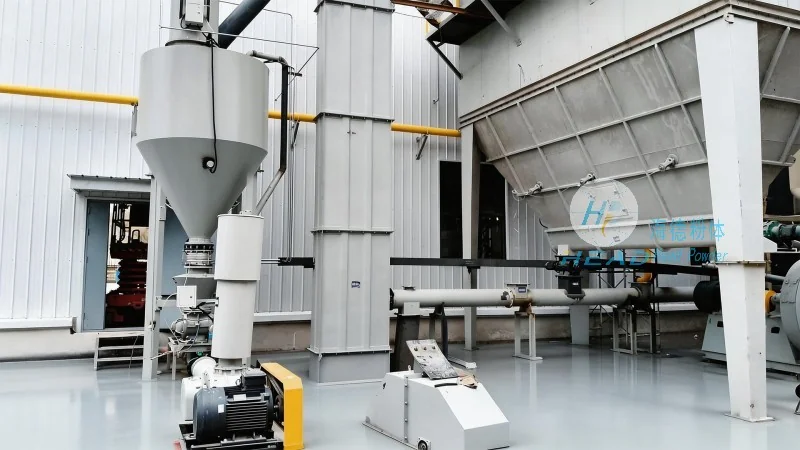
The microcrystalline cellulose MCC pneumatic conveying system provided by Head Powder uses either positive pressure dense phase or negative pressure dilute phase conveying methods, allowing for customized designs based on material characteristics and on-site conditions. The system consists of a feeding device, delivery pipelines, air source equipment, separation and filtration device, and intelligent control system. The entire line uses sealed pipelines for transportation, effectively preventing dust leakage. To address the fragile nature of MCC, we have optimized the conveying air velocity and solid-gas ratio to achieve gentle conveying with low shear and low impact, supporting material quality.
Product advantages
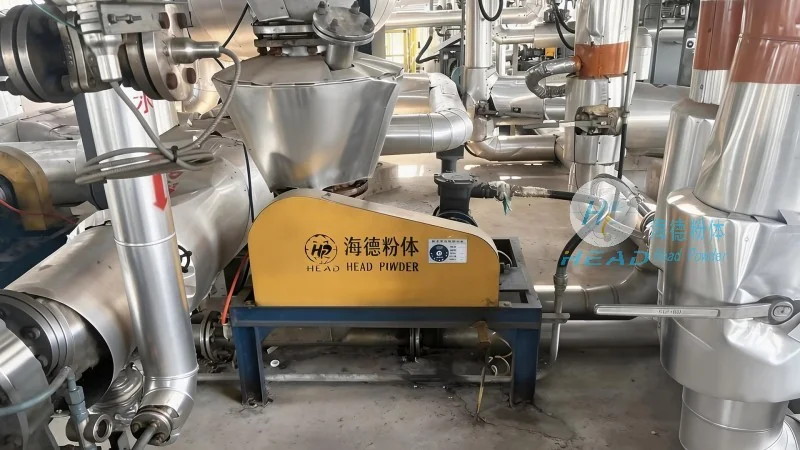
To meet customers' core demands for dust prevention, damage resistance, and high efficiency and stability, the Head Microcrystalline Cellulose MCC pneumatic conveying solution has the following application features:
- Fully Sealed Dust-Free Conveying:The pipeline system uses flange connections and sealing gaskets, combined with high-efficiency dust removal and filtration devices, achieving low dust emissions in the workshop.
- Low crushing rate design:By optimizing the curvature of the bend, controlling the flow velocity in straight pipe sections, and configuring wear-resistant elbows, the breakage rate during material transportation is kept at a low level.
- Anti-static and moisture-proof treatment:The pipeline is made of stainless steel and grounded, and the air source is equipped with a dehumidifying and drying device to suit the characteristics of MCC materials.
- Intelligent Regulation and Energy Saving:Equipped with variable frequency fans and PLC control systems, it can automatically adjust air volume based on actual conveying volume, reducing energy consumption, while also supporting remote monitoring and data collection.
Head Powder provides full-process services for every MCC conveyor line, from solution design and equipment manufacturing to installation and commissioning, helping ensure stable system operation and easy maintenance, and assisting enterprises in achieving clean and automated production upgrades.