

Pneumatic conveying solution for mannitol powder
In the pharmaceutical and food industries, the transportation of mannitol powder often faces issues such as dust swirling, material moisture, and pipeline blockages, which seriously affect production efficiency and product quality. How to achieve sealed, efficient, and low-damage conveying has become a focal point for the industry.
Material Characteristic Analysis
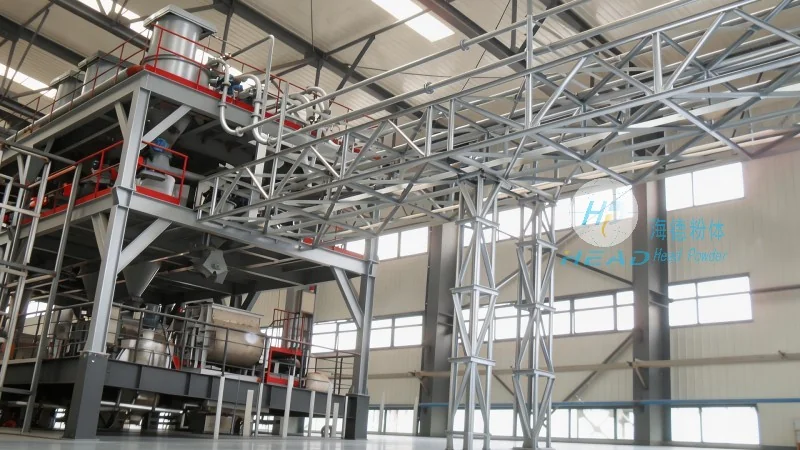
Mannitol powder is characterized by strong hygroscopic absorption, fragile granules, and average flowability. Its particle size is usually between 100-200 mesh, with a bulk density of about 0.5-0.7 g/cm³, making it sensitive to humidity control and mechanical impact during conveying. If traditional mechanical conveying methods are used, issues such as material adhesion, pipeline wall formation, and particle fragmentation are likely to occur.
Product Introduction
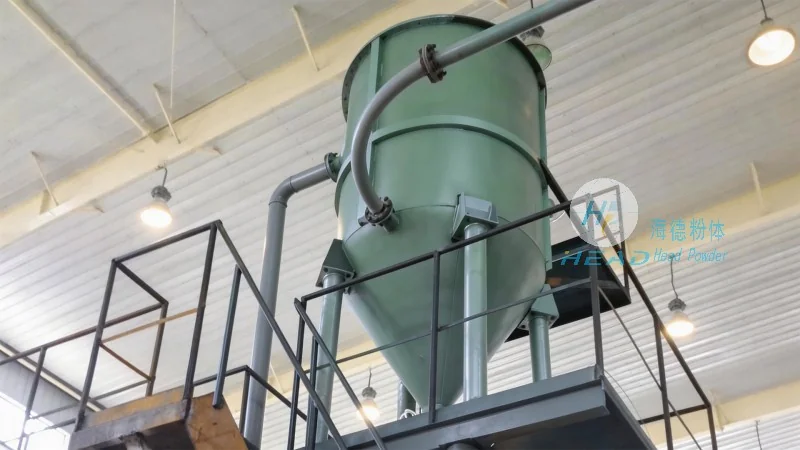
The pneumatic delivery system for mannitol powder provided by Head Powder uses sealed pipelines to utilize air flow to transfer materials. The system integrates feeding devices, conveying pipelines, gas source equipment, dust separation units, and intelligent control modules, allowing for customized design based on production capacity requirements and site layout. The entire set of equipment meets GMP clean production requirements, made of food-grade stainless steel, with polished inner walls to prevent material residue and cross-contamination.
Solutions address customer pain points

To address the issue of moisture absorption and caking in mannitol powder, the system is equipped with a dry air source and a heat tracing insulation structure to keep the internal environment of the pipeline relatively stable; To address the issue of fragile particles, a low-speed dense phase conveying mode is adopted to reduce material collision speed; To address the risk of pipeline blockages, automatic back-blowing and pressure monitoring devices are installed to clear the issue promptly; To address dust leakage issues, the entire process is operated under either negative pressure or slightly positive pressure, combined with high-efficiency filters to achieve dust-free operation. The entire system can operate continuously, reducing manual intervention and improving production stability.