

PVC resin powder pneumatic conveying solution
During the production and transportation of PVC resin powder, traditional manual or mechanical conveying methods often face issues such as dust emissions, high material waste, harsh production environments, high labor costs, and low conveying efficiency. These pain points not only affect production efficiency but also increase environmental compliance pressure and occupational health risks.
Material characteristics

PVC resin powder is a lightweight, easily airborne, and static-generating powdery material. It usually has a small particle size (about 50-150μm) and a bulk density of about 0.4-0.6 g/cm³. It has strong moisture absorption and demands high sealing, anti-static, and anti-caking requirements for the conveying system. At the same time, the material has low abrasion resistance to conveying pipelines and equipment, but its fluidity is significantly affected by humidity and static electricity.
Product Introduction
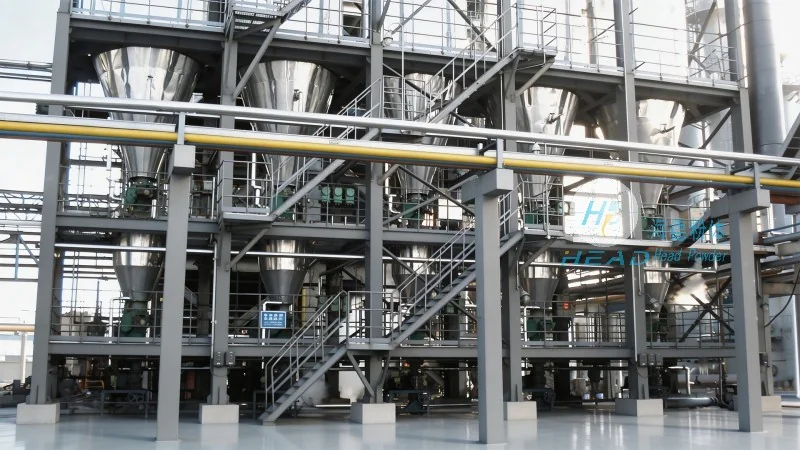
Head Powder offers customized pneumatic conveying solutions tailored to the material characteristics of PVC resin powder, including multiple system forms such as positive pressure dense phase conveying and negative pressure dilute phase conveying. The system consists of a feeding device, conveying pipeline, air source equipment, separation and filtration device, and an automatic control system. It can be customized for non-standard design according to customer site processes, conveying distances, and capacity requirements to achieve fully sealed, automated, and low-energy material conveying.
Product advantages

To address these customer pain points, Head Powder's PVC resin powder pneumatic conveying system offers the following solutions: fully enclosed conveying pipelines effectively suppress dust leakage and improve the working environment; Automated control systems reduce manual intervention, lowering labor costs and operational errors; Featuring anti-static and anti-arching designs to ensure smooth conveying and material quality; The system can be integrated into existing production lines to achieve continuous, stable, and controllable material flow, improving overall production efficiency.