

Light calcium pneumatic conveying solution
In the production and processing of light calcium (light calcium carbonate), material conveying often faces issues such as dust pollution, pipeline blockages, severe equipment wear, high energy consumption, and low manual operation efficiency. Traditional mechanical conveying methods struggle to adapt to the poor flowability, moisture absorption, and light specific gravity of light calcium powder, leading to frequent production line shutdowns and maintenance, which affects overall production efficiency and product quality stability.
Material characteristics
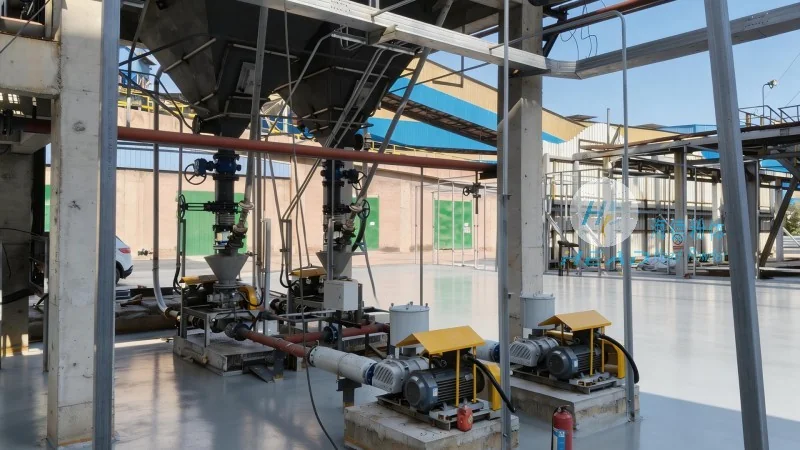
Light calcium is a white powder with fine particle size (usually 1-10 microns) and an apparent density of about 0.4-0.7 g/cm³. It has a large specific surface area, easy agglomeration, strong hygroscopicity, and poor flowability. During conveying, dust is easily generated, and there is significant wear on pipelines and elbows, so targeted pneumatic conveying solutions are needed to support smooth, low-loss, and environmentally friendly material transfer.
Product Introduction
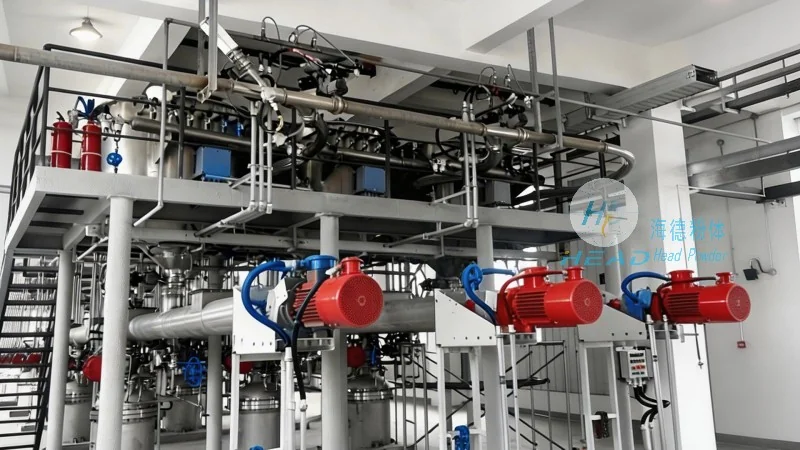
The light calcium pneumatic conveying system launched by Head Powder uses a closed pipeline conveying method, combined with positive or negative pressure pneumatic conveying technology, providing a complete solution for light calcium materials from feeding, conveying, dust removal to automated control. The system can be custom-designed according to customers' on-site conditions, capacity requirements, and workshop layouts to meet the conveying requirements of different stages such as feeding, transfer, and packaging.
Product advantages
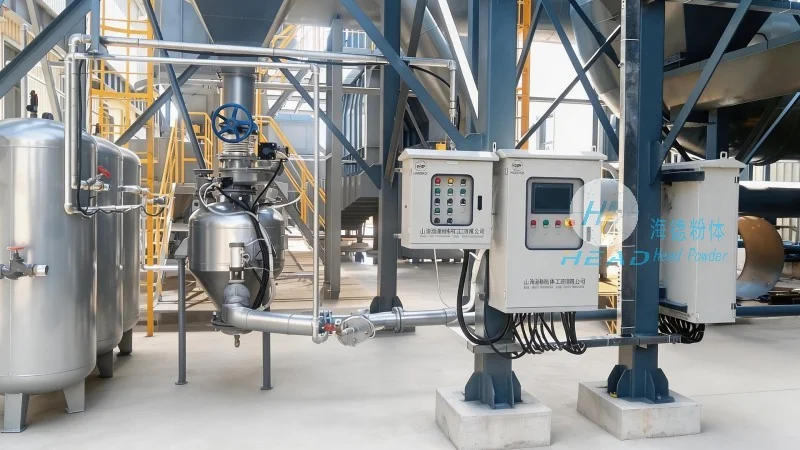
To address pain points such as easy blockages, heavy dust generation, and rapid wear during light calcium transport, Head Powder has optimized system structure, pipeline material selection, air source configuration, and control logic: it adopts a low-velocity fluidized design to reduce pipeline wear, is equipped with a dedicated anti-agglomeration feeding device to avoid bridges, integrates a high-precision pulse dust collector to control dust emissions, and is equipped with a PLC automatic control system to achieve unattended, remote monitoring, and fault warnings, thereby improving conveying efficiency and operational stability, and reducing overall operating costs.