

Pneumatic conveying solution for hard toner
During the processing and transportation of hard toner, enterprises often face issues such as material leakage, severe dust pollution, low conveying efficiency, rapid pipeline wear, and frequent equipment blockages. Traditional manual or mechanical conveying methods not only consume high energy and have high maintenance costs, but also struggle to ensure material quality stability, becoming a key bottleneck restricting production capacity and meeting environmental standards.
Material characteristics
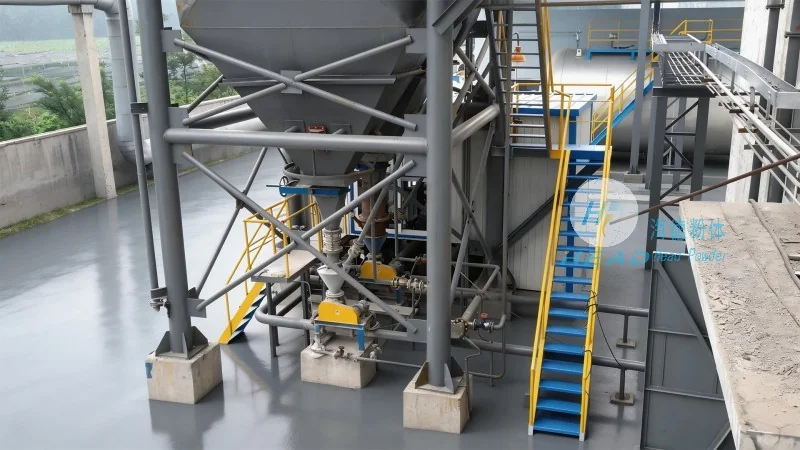
Hard carbon powder is a powder material with high hardness, high brittleness, and fine particle size. It has strong abrasive properties, clumps easily, generates static electricity, and is sensitive to moisture. Its particle shape is irregular, with a large angle of rest and poor flowability. If the parameter design is improper during conveying, bridging, blockage, or breakage can easily occur, requiring high wear resistance, sealing, and pneumatic balance in the conveying system.
Product Introduction

Head Powder's hard carbon powder pneumatic conveying system uses sealed conveying methods of positive or negative pressure, allowing for customized design based on material characteristics, conveying distance, and production requirements. The system covers feeding devices, delivery pipelines, gas source equipment, dust separation and removal devices, and automated control systems, enabling continuous, stable, and dust-free delivery of hard toner, suitable for production scenarios in industries such as lithium battery anode materials and specialty carbon.
Product advantages
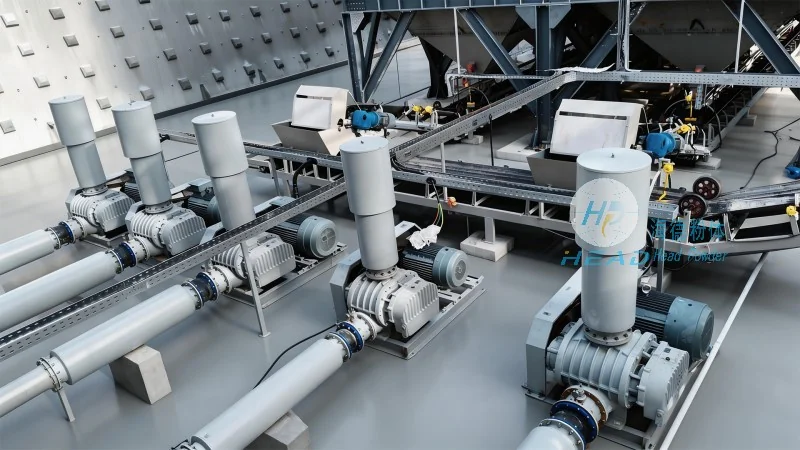
To address the abrasive nature and clogs of hard carbon powder, Head Powder uses highly wear-resistant alloy pipelines and optimized elbow designs to effectively extend equipment lifespan; By equipping anti-static devices and an intelligent material-gas ratio adjustment system, static electricity accumulation and pipeline blockages are prevented; Fully enclosed negative pressure or positive pressure conveying structures that fully prevent dust leakage and meet environmental compliance requirements; At the same time, the system supports PLC automated control, allowing real-time monitoring of pressure, flow, and material levels, reducing manual intervention and improving operational energy efficiency.