

Pneumatic asphalt powder conveying solution
During the transportation and feeding of asphalt powder, traditional manual or mechanical conveying methods often face issues such as dust accumulation, difficult environmental management, high material loss, and frequent equipment blockages. In addition, asphalt powder has characteristics such as high viscosity and easy clumping, leading to low conveying efficiency and rising equipment maintenance costs year by year. These pain points seriously affect the continuity of production lines and the safety and health of operators.
Material characteristics
Asphalt powder is a highly fine powdery material with low density, poor flowability, and typical temperature sensitivity. At room temperature, it easily absorbs moisture and forms clumps, but after heating, its adhesion increases, making it highly adherent to the pipe walls. At the same time, asphalt powder is a combustible dust and poses an explosion risk in enclosed spaces, so strict requirements are placed on the sealing, anti-static, and explosion-proof performance of the conveying system.
Product Introduction

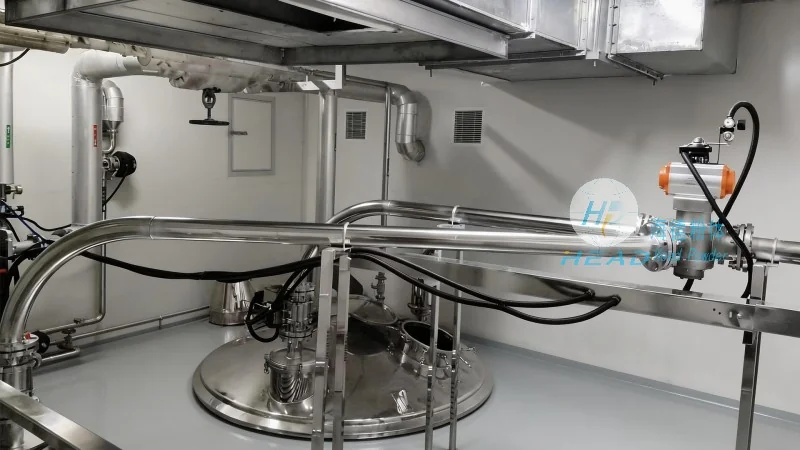
Head Powder has developed a customized pneumatic conveying system tailored to the unique physical and chemical properties of asphalt powder. This system uses sealed pipeline positive or negative pressure conveying methods, achieving stable, efficient, and dust-free delivery of asphalt powder by precisely controlling airflow speed and mixing ratio. The core components of the system include a dedicated sending tank, rotary feeder, explosion-proof pulse dust collector, and an intelligent control system. They can be flexibly designed according to the actual factory layout and capacity requirements to meet conveying tasks under different working conditions.
Product advantages

To address customer pain points, the Head Powder Asphalt Pneumatic Conveying System offers the following solutions:
- Fully enclosed conveying: Eliminates dust leakage, improves the working environment, and reduces environmental compliance risks.
- Anti-clogging design: Uses special inner wall treatment and air cushion flow support technology to reduce material deposition at the bends and valves, supporting continuous conveying.
- Energy saving and efficiency: By optimizing air source matching and transmission pipelines, energy consumption is reduced, while minimizing material damage and loss.
- Intelligent monitoring: Integrates material level, pressure, flow sensors, and PLC control systems to achieve automated operation and remote maintenance, reducing manual intervention.